To choose the best robotic cleaner it is essential to understand the specific aspects of your pool. It is crucial to align the robot's performance with your pool. A robotic pool cleaner is a significant investment. If you don't pay attention to these aspects, it could result in a faulty cleaning system, possible damage to your pool or robot and ultimately, buyer's remorse. This guide is comprehensive and outlines the 10 essential specifications of your pool that you need to know prior to buying.
1. Primarily Surface Materials:
This is the most crucial factor. The finish on the interior of the swimming pool dictates the type brushing mechanism that the robot should have for cleaning it efficiently without causing harm.
Concrete/Gunite/Plaster (including Pebble Tec & Quartz): These are rough, durable surfaces that often develop algae films. They require a robot with bristles stiff and stiff which are usually coated with vinyl or nylon. The robot is able to aggressively scrub the surface and remove biofilm and embedded dirt.
Vinyl Lining: Vinyl is relatively elastic and soft. It is very easy to puncture or scratch. Robots for vinyl need to use soft, non-abrasive brushes (usually made from the pure rubber or vinyl) and wheels that do not have sharp edges. A cleaner that has stiff brushes that are designed for concrete may cause premature wear or tear to the liner.
Fiberglass is a material with an extremely smooth gel-coated surface. Abrasive materials can scratch vinyl. Robots that have rubber brushes that are soft or without roller systems would be ideal. The smooth surface also often allows robots to clean more efficiently and using less power.
2. The shape and complexity of the pool
The geometrical layout of your swimming pool will determine the level of navigation and cable length required.
Freeform or rectangular What is the best choice? A rectangular pool is most straightforward to keep in good condition. Most robots are capable of cleaning it. Robots with a simpler design might get caught in curves or coves found in freeforms, L-shaped, kidney-shaped and other pool shapes. In these situations, a robot equipped with advanced algorithmic navigation (gyroscopic or smart-sensing) is strongly recommended to ensure complete coverage.
Transitions, Coves, and Ledges The transition from the floor of the pool to the wall (the "cove") is an area where debris may accumulate. Ensure that the robot can clean the curved area. If your pool has large flat ledges, or sun shelves, (Baja shelf) Make sure that the robot is able climb on them and take care to clean. Certain models were made for walls and floors.
3. Pool Dimensions (Length Width, Length and the Maximum Depth):
The requirements for these measurements must be met in order to choose a power cord that is suitable.
Cable Length. The robot cable should have a minimum length of 60 feet. This is the norm for medium to large pools. The most common length for cable cables for medium and large-sized pools is 60 feet. Find out the length of your pool before shopping.
Depth Capability The majority of modern robots have the ability to clean depths of up 8-10feet without any issues. The maximum rating of the robot should be checked if the depth is more than 10 feet. Exceeding it can strain the pump motor and could void the warranty.
4. The Water Level and Tile/Coping
Cleanliness is crucial at the interface between pool structure and water.
Waterline Tile Cleaning: This feature is common in robots that range from medium to high-end price. If your stone, tile, or glass is prone to waterline scum, then you should consider a robot that is that is marketed for its superior waterline cleaning capabilities. This usually involves a slightly different pattern of climbing as well as a brush action at its highest point.
Concrete, pavers or even stone can be used to cap the wall of a pool. It can snag the cable of a robotic if it has a savage or sharp edge overhang. This is important to remember when the routing of your cable.
5. There are many elements and obstacles within the pool.
A clear pool is simpler to keep clean than one brimming with hazards.
Main Drains and Vents Ensure the main drain covers are securely fastened and in line with the floor of the pool. Drains with protruding edges from the past may catch smaller robots. Water return vents on floors typically aren't a problem.
These options, like ladders, steps, and seating built-in, could interfere with a robot’s cleaning routine. Ladders that are placed on the floor using their legs can entrap a robotic. To get rid of or climb stairs and benches, a machine requires power and traction. Simple, random navigation robots may be unable to navigate these areas, whereas better models will be able to handle them.
Similar to steps, it's crucial to scrub large flat surfaces such as benches and swimming pools. Test the robot's capacity to efficiently traverse horizontal spaces.
6. Points of Entry and Exit (for Robot)
Consider the possibilities of getting the robot out of the water.
Physical Access - Do you need to transfer the robot across an area of decking or down a set of steps? The weight of the robot is an important factor. A robot that weighs 25 pounds is much easier to handle than one that weighs 40 pounds. It is crucial to have a storage cart in this situation.
Robots for above-ground swimming pools While not as common there are robots specially made for above-ground pools. They are often lighter and designed to not be able to climb walls.
7. The volume and type of debris:
The robot's capabilities will be determined by the "job" it's expected to complete.
If this is a significant issue, a solution to filtration is essential. It is vital that your robot is equipped with ultra-fine filters (pleated papers or meshes of very fine size) and can use effective methods to catch tiny dust particles.
Twigs, Leaves, and Acorns: For larger debris, you'll need an equipment with a huge debris canister or bag and a powerful suction pump and an intake that doesn't get blocked easily. Some models feature impellers that are designed to crush larger leaves to avoid getting blocked.
8. Where is the Power Source and Outlet Type:
Robotic cleaners make use of low-voltage DC powered by a converter which connects to any outlet that is standard.
GFCI Outlet Mandatory: To ensure safety, power supplies MUST be plugged into the Ground Fault Circuit Interrupter Outlet (GFCI). This is a non-negotiable requirement. It is crucial to have an electrical outlet installed near your pool, if you don't already have one.
Distance from Pool. To protect the transformer from splashes and rain, it should be placed at least 10 ft away from the pool edge. Make sure your cable can reach the furthest point of your pool from this position.
9. Local Climate Environment and Storage Environment
The way you keep your robot will affect its lifespan.
Storage outside of season Manufacturers specifically warn against storing robots underwater or under direct sunlight for prolonged periods. UV rays can damage plastics and cable. You need an air-conditioned, dry and shaded area (like an outdoor shed or garage) for storing the robot and its cable during non-use for long periods.
A storage caddy is ideal for use in the summer months. If you frequently use the robot, it should be neatly placed next to the pool. The cord will not get caught on the deck.
10. Existing Pool Circulation and Filtration:
The pool's eco-system is where the robot resides.
Additional functions - The robot's primary task is to eliminate sediment and debris from the surface. It does not substitute the circulation and filtration systems that are responsible for filtering out dissolved particles and dispersing chemicals. The robot functions as an additional cleaner and reduces the load on your primary filters.
Chemical Balance - A clean pool surface can become infested with algae if the water chemistry is not in balance. The robot helps maintain cleanliness but does not replace the requirement for proper sanitization and water balance. View the most popular conseils pour le nettoyage de la piscine for site info including the pool cleaner, technology pool, aiper pool cleaner, swimming pool cleaning services near me, technology pool, swimming pool cleaners, pool rovers, swimming pool automatic vacuum, pools pro, the pool cleaner pool sweep and more.
Top 10 Tips For Improving The Efficiency Of Robotic Pool Cleaners
The energy efficiency of robots for cleaning your pool is vital, because it will directly impact your operating costs over time, your ecological footprint, and your convenience. Unlike older pressure-side or suction-side cleaners that rely on the power of your pool's main pump, which is a major energy drainer, robotic cleaners are self-contained systems. They operate on their own low-voltage, high-efficiency motor. The most significant benefit is their fundamental difference in that they save a lot of energy. However, not all robots, are the same. You can pick a robot by analyzing the power consumption, modes of operation, and necessary infrastructure.
1. The Main Advantage: Low Voltage Independent Operation.
The basic idea is this. A robotic cleaner has its own onboard pump and motor which is which is powered with a transformer that plugs into a standard GFCI outlet. It runs on low-voltage DC voltage (e.g. 24, 32V) which makes it more reliable and safe to run than the 1.5 or 2.5 HP main swimming pool pump. This autonomy allows the robot to operate without the need to run your main pump.
2. Watts. Horsepower.
Understanding the magnitude is essential to understand the savings. A typical pool's pump draws between 1500 and 2,500 Watts per hour. A top-quality robot pool cleaner by contrast, uses between 150 and 300 watts per hour during its cleaning cycle. This is a 90% energy savings. The energy needed to run a robotic device on three hours is equal to the power required to run several household lightbulbs at the same time. This is in contrast to the main pump which uses energy like an appliance.
3. The DC Power Supply/Transformer's critical role
The black box which sits between the robot's plug and cable, is an intelligent converter. The transformer converts 110 and 120V household AC current into DC power the robot will be able to utilize. The quality of this component is vital for the robot's efficiency and safety. It contains the circuitry that regulates the programming cycle, and offers Ground Fault Circuit Interruption Protection (GFCI) which cuts power instantly in the event an electrical malfunction.
4. Smart Programming for Better Productivity.
Programming directly affects the robot's energy consumption. Efficiency is improved by the ability to choose particular cleaning cycles.
Quick Clean/Floor Mode: The machine operates in this mode for a shorter duration (e.g. an hour) with just the floor-cleaning algorithm activated and consuming less energy.
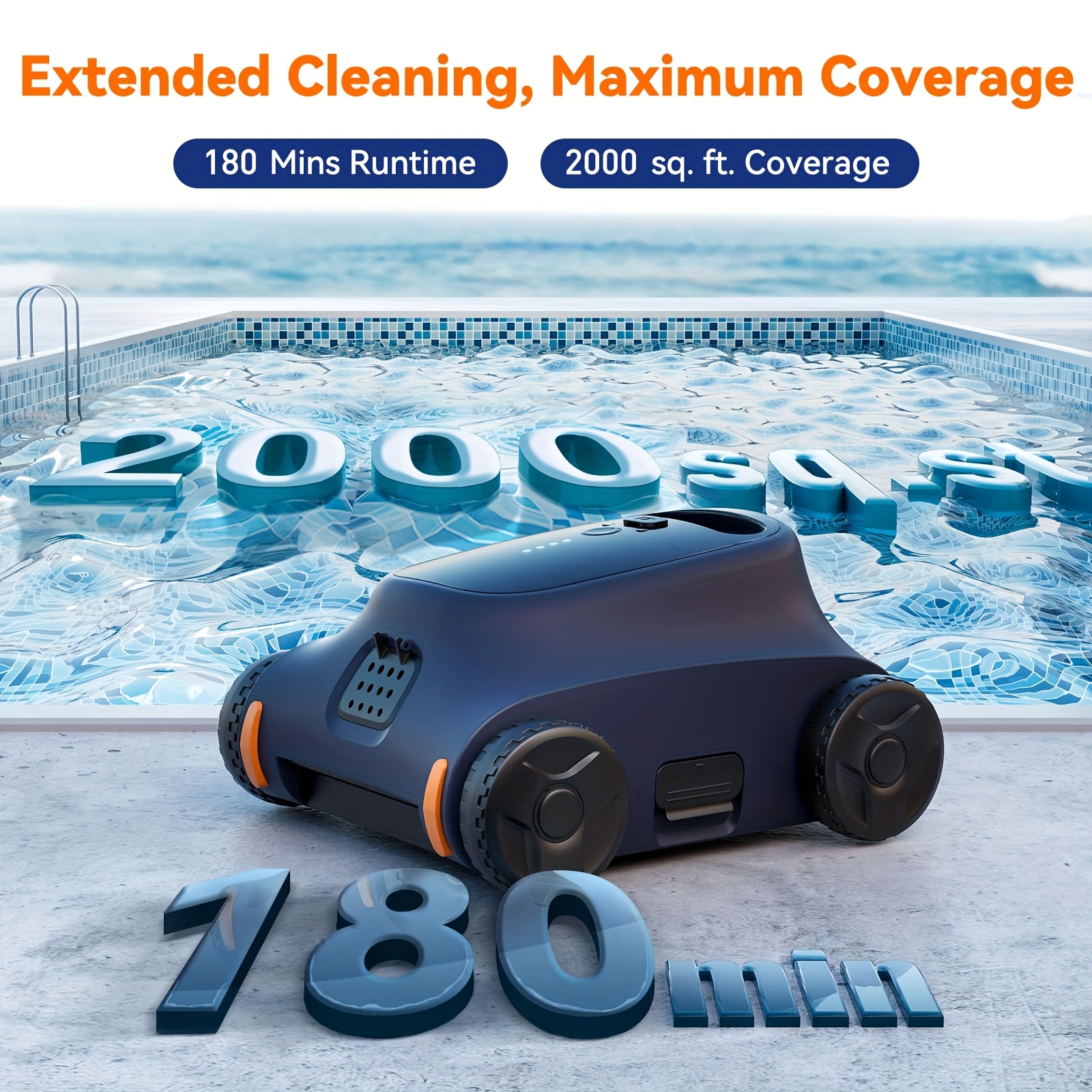
Full Clean mode: A normal cycle that lasts between 2.5 to 3 hours to achieve comprehensive cleaning.
Make sure to only use the energy required for the current task. Don't waste power by running the machine for longer than it's required.
5. The Impact of Navigation On Energy Consumption.
The amount of energy used by the robot is directly connected to the direction it travels when cleaning. The way a robot navigates that is unpredictable and "bump-and turn" is inefficient. It can take up to at least four hours to clean the pool in a random manner, consuming more energy. A robot with systematic, gyroscopically-guided navigation cleans the pool in a methodical grid pattern, completing the job in a shorter, predictable timeframe (e.g., 2.5 hours), thereby using less total energy.
6. GFCI Outlet Requirement & Location.
To be safe, the robot is required to be connected to an Ground Fault Circuit Interrupter outlet (GFCI). These outlets are usually located in kitchens and bathrooms. If your pool does not have a GFCI outlet, one is required to be installed by an electrician who is licensed prior to cleaning the pool. To protect the transformer from splashes and other elements, it should be at least 10 feet away from the edges of the pool.
7. Cable Length and Voltage drop
The power that travels through the cable at a low voltage may experience the dreaded "voltage drop" when stretched over a long distance. Manufacturers set a minimum distance for cables (often between 50 and 60 feet) to avoid any problems. Insufficient power could be supplied to the robot when the cable length exceeds this, leading to a slow and unreliable performance. Don't make use of extension cords. They could cause voltage to drop and cause a safety issue.
8. Comparing the effectiveness of other cleaners
Be aware of what you're comparing the robot to.
Suction-Side Cleaners: These depend on the main pump for suction. You must run the pump for between six and eight hours each day.
Pressure-Side Cleaning: This kind of cleaner utilizes your primary pump for pressure, and an additional pump that provides an extra 1-1.5 HP to the continuous energy consumption.
The robots' efficiency as an independent option makes them the most economical choice over the long run.
9. The calculation of the Operating Cost
You can estimate the costs of running your robot. It is possible to calculate the cost using the formula: (Watts/1000) x Hours used x Electricity rate ($/kWh).
Example: A robot of 200 watts that is used for 3 hours per day, for 3 days over three week, costing $0.15 one Kilowatt.
(200W / 1000) = 0.2 kW. 0.2kW * 9 hrs/week =1.8 kWh. 1.8 kWh times $0.15 equals $0.27 per week or $14 annually.
10. The Energy Efficiency Marker is used as a Quality measure
In general, superior motor technology and efficiency are associated with better quality products. A robot which cleans more efficiently and thoroughly with less energy is usually a sign of better engineering. It may also indicate a pump system that is more powerful, yet still effective. True efficiency is not about a motor with a high wattage that can provide more power to suction and climb. It's about the combination of cleaning efficacy within a brief timeframe and low-wattage. A model that's efficient and designed well can save you money on your utility bills for a long time. See the top saugroboter pool akku for more recommendations including robot to clean the pool, pool cleaner store, swimming pool, pro pool cleaner, swimming pools in store, pool sweep cleaner, robotic pool cleaner, cleaning robot pool, swimming pool for swimming, pool store and more.
